
Did David Jones forget what made it a destination?

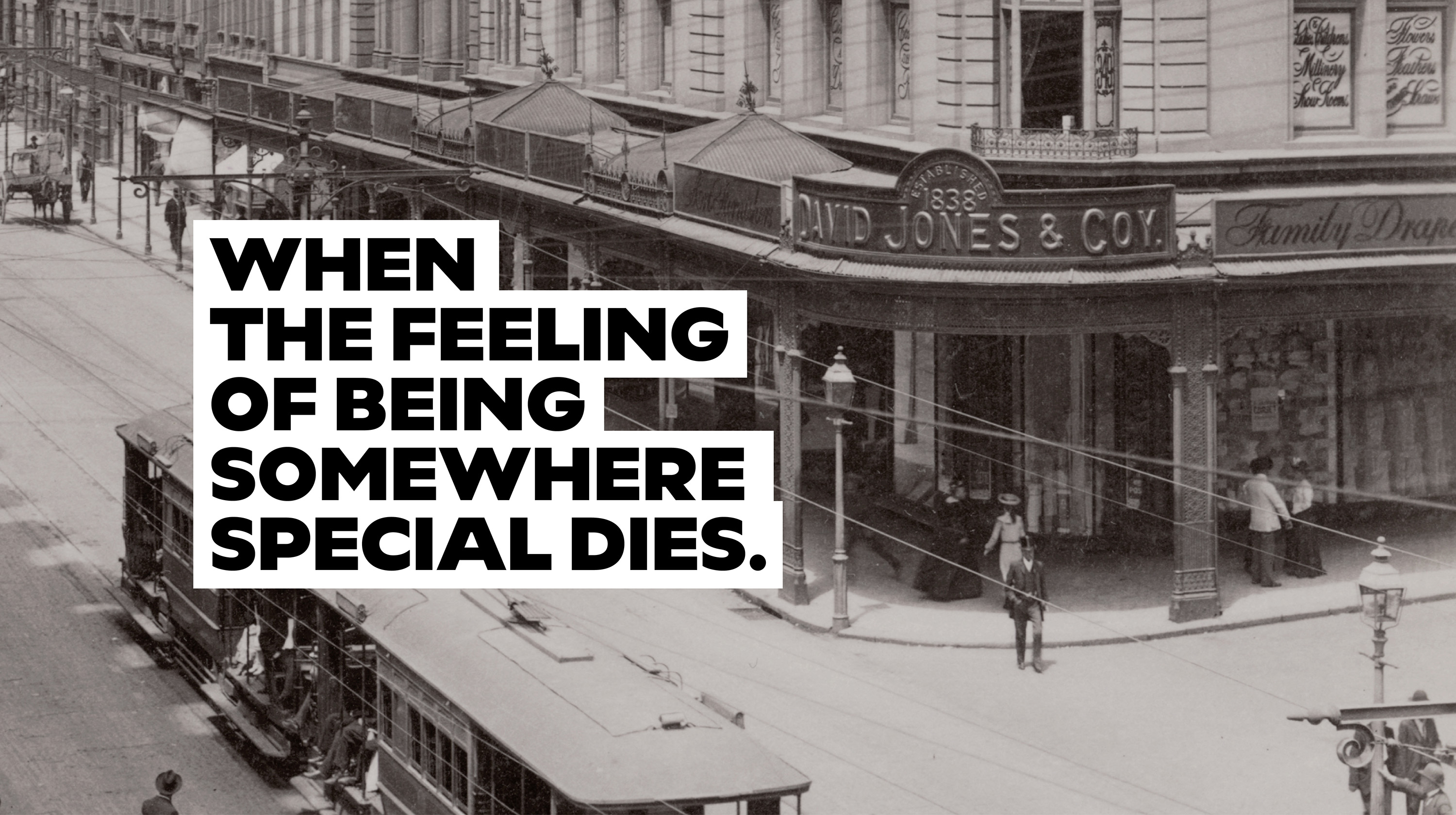

There's something rather curious about the troubles facing David Jones.
I've been reading plenty of opinions about where it all went wrong. But I wonder whether part of the answer lies in decisions made decades ago.
To understand why, we need to go back to a time when a trip to David Jones was an occasion in itself.
The food hall. The Christmas displays. The service. The feeling of being somewhere special.
You didn't necessarily need to buy anything. The visit itself was part of the attraction.
David Jones wasn't simply a retailer. It was a destination.
Then Australia changed.
Our cities sprawled, families moved into the suburbs, and shopping centres began replacing the high street as the place where Australians shopped.
Naturally, department stores followed their customers.
And commercially, that made perfect sense.
But I wonder whether something rather important changed in the process.
Years later, following the Global Financial Crisis, I was working on shopping centre and retail precinct branding across Europe, South America and Africa.
These markets had been hit much harder than Australia. Retailers were struggling, shopping habits were changing, and shopping centres were being forced to rethink what would bring people through their doors.
And something interesting was happening.
The centres that were thriving weren't necessarily the ones with the best shops.
They were the ones giving people reasons to visit that had very little to do with shopping.
Restaurants. Entertainment. Meeting places. Shared experiences.
We talked about creating the new town square.
In Europe, of course, town squares had been at the heart of community life for centuries. Places to gather, eat, celebrate and spend time together.
Australia never really developed that same culture. But we had our city centres. And at the heart of many of them were our great department stores.
Which brings me back to David Jones.
While shopping centres around the world were working to become destinations, David Jones had already been one.
But when David Jones followed its customers into suburban shopping centres, something subtle happened.
It became an anchor tenant in a much larger destination.
People could visit the shopping centre, eat, meet friends and make memories without ever setting foot inside David Jones.
And perhaps that changed more than its address.
Think about the difference between buying something and remembering somewhere.
A purchase gives us a little dopamine hit. A brief moment of satisfaction.
But an experience shared with someone we love can stay with us for decades.
And those memories have an extraordinary commercial consequence.
They bring us back.
Not because we need something. But because we want to be there.
I wonder whether, in adapting to the changing retail landscape, David Jones gradually lost sight of that distinction.
The closure of Melbourne's famous food hall feels symbolic of this. It wasn't simply somewhere to buy food. It was part of the reason people went to David Jones.
Perhaps the decisions that led us here made perfect commercial sense at the time. Perhaps they were even necessary.
But there's a difference between modernising a business and losing sight of why people love it.
David Jones didn't need to become a destination.
It needed to remain one.




FUEL IT
FURTHER

